





Binding Post Connectors: Key Components for High-Fidelity Audio Systems
Binding post connectors play a vital role in delivering high-fidelity audio performance. These connectors ensure secure and stable links between amplifiers and speakers, enhancing sound clarity and system reliability. Audiophiles often pair them with banana plug connectors or audio speaker plugs to minimize signal loss and distortion. Additionally, many systems incorporate 1/4-inch speaker connectors for compatibility and convenience. By maintaining a high-quality connection, these components unlock the full potential of audio systems, ensuring an immersive listening experience.
Key Takeaways
- Binding post connectors help link amplifiers and speakers securely. This improves sound quality and keeps the system reliable.
- High-quality binding posts, like gold-plated ones, reduce signal loss. They also lower distortion, making the sound better overall.
- Check and clean Binding post connectors often to avoid problems. This helps stop signal loss and keeps them working well for a long time.
- Banana plugs make connecting easier and more stable. They are great for setups that need frequent changes.
- Pick the right binding post connector for your audio system. This helps your system work its best.
Understanding Binding Post Connectors
What Are Binding Post Connectors?
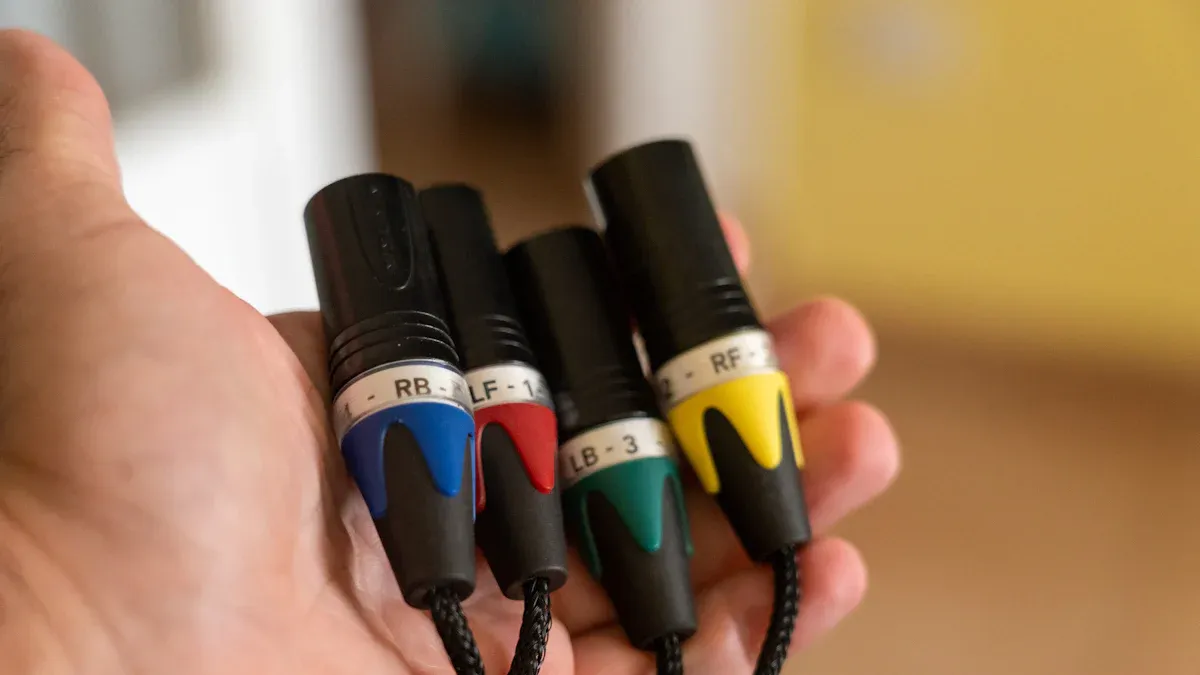
Binding post connectors are specialized terminals designed to establish secure and efficient connections between audio equipment, such as amplifiers and speakers. These connectors are versatile, accommodating various connection types, including bare wires, spade connectors, pins, and banana plugs. Their robust design ensures durability and reliability, even in demanding audio setups.
Note: Binding post connectors are commonly used in high-level connections for amplified audio signals, making them a staple in professional and home audio systems.
A technical overview highlights their functionality:
| Feature | Description |
|---|---|
| Type | Binding Posts, 5-way |
| Functionality | Accepts bare speaker wire, spade connectors, pins, and banana plugs |
| Usage | High-level connections for amplified audio signals from A/V receivers to speakers |
| Additional Info | Suitable for subwoofers and main speakers, though internal bass management is not applicable with high-level hookups |
Why Are They Important in High-Fidelity Audio Systems?
Binding post connectors play a critical role in maintaining audio fidelity by ensuring stable and high-quality connections. Poor connections can lead to signal loss, distortion, or even damage to audio equipment. High-quality binding posts mitigate these risks, preserving the integrity of the audio signal.
Several factors underscore their importance:
- Users have reported noticeable improvements in sound clarity after upgrading to high-quality binding posts.
- Materials like steel or iron-infused brass in connectors can cause electromagnetic interference (EMI), which degrades audio performance.
- Premium binding posts, made from superior materials, minimize EMI and enhance sound fidelity.
Their ability to work seamlessly with banana plugs and other connectors further enhances their utility in high-fidelity systems. This versatility allows audiophiles to customize their setups for optimal performance.
Key Features and Benefits
Binding post connectors offer several features that make them indispensable in audio systems:
- Versatility: They support multiple connection types, including bare wires, spade connectors, and banana plugs.
- Durability: Their robust construction withstands repeated use, ensuring long-term reliability.
- Signal Integrity: High-quality materials and precise engineering minimize signal loss and distortion.
- Ease of Use: Their design simplifies the process of connecting and disconnecting audio components.
Tip: For the best results, choose binding post connectors made from high-quality materials, such as gold-plated options, which resist corrosion and improve conductivity.
Binding post connectors also enhance flexibility in audio setups. Their compatibility with various connectors allows users to experiment with different configurations, unlocking the full potential of their audio systems.
Types of Binding Post Connectors
Standard Binding Posts
Standard binding posts are the most basic type of connector used in audio systems. These posts provide a simple yet effective way to connect speaker wires to amplifiers. They are compatible with bare wires, spade connectors, and banana plugs, making them versatile for various setups. Standard binding posts are often color-coded, with red and black indicating positive and negative terminals, respectively. This feature helps users maintain proper polarity during installation.
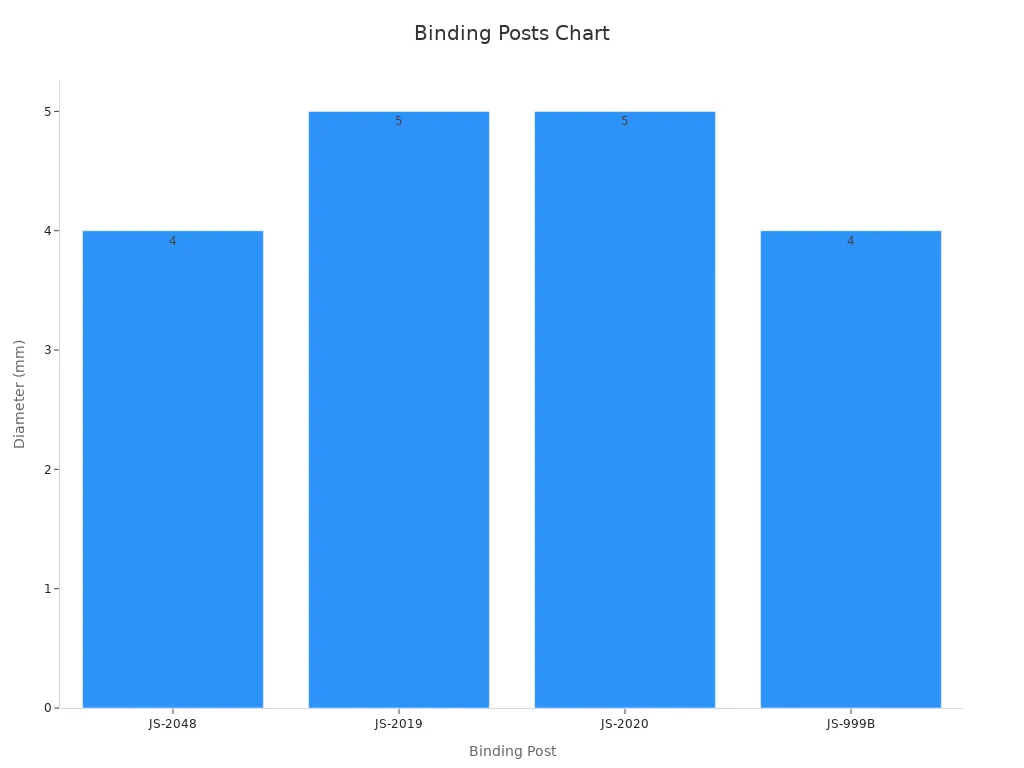
A variety of standard binding posts are available in the market. For example, the JS-2043 model features dual posts in red and black, while the JS-2048 and JS-999B models have a 4mm diameter, suitable for most audio applications. These connectors are reliable and cost-effective, making them a popular choice for both beginners and professionals.
5-Way Binding Posts
5-way binding posts offer enhanced flexibility by supporting five different connection methods: bare wire, spade connectors, banana plugs, pin connectors, and looped wire. This versatility makes them ideal for complex audio setups where multiple connection types may be required. Their robust design ensures a secure and stable connection, even under high power loads.
Models like the JS-2019 and JS-2020, with a 5mm diameter, exemplify the adaptability of 5-way binding posts. These connectors are often used in high-performance audio systems, where maintaining signal integrity is crucial. The JS-2031 model, with a current rating of 30A, demonstrates the capability of 5-way binding posts to handle demanding audio environments.
Gold-Plated Binding Posts
Gold-plated binding posts are designed for audiophiles seeking superior sound quality. The gold plating enhances conductivity and resists corrosion, ensuring long-term performance. These connectors are particularly effective in minimizing signal loss and distortion, making them a premium choice for high-fidelity audio systems.
The JS-2032 model, made of brass with gold plating, exemplifies the durability and performance of these connectors. Gold-plated binding posts are often used in professional audio setups, where every detail of sound matters. Their ability to maintain a clean and stable connection under various conditions makes them indispensable for achieving optimal audio performance.
Tip: For the best results, pair gold-plated binding posts with high-quality speaker wires to maximize sound clarity and system reliability.
Choosing the Right Type for Your System
Selecting the right binding post connector is essential for achieving optimal performance in a high-fidelity audio system. The choice depends on several factors, including compatibility, sound quality, and ease of installation. Each type of connector offers unique advantages, making it important to match the connector to the specific requirements of the audio setup.
The following table outlines key considerations for different connector types:
| Connector Type | Description | Key Considerations |
|---|---|---|
| Banana Plug | Fits into binding posts; compatible with bi-wiring/-amping speakers. | Ensure binding posts have the feature. |
| Spade Connection | Maintains contact once the binding post screw is tightened. | Good for secure connections. |
| Pin Connector | Works with spring-loaded terminals; can be used with binding posts. | Requires unscrewing for access. |
| Wire Gauge | Thicker wires (lower gauge) deliver better sound but are less flexible. | Balance between flexibility and sound quality. |
| Sound Quality | High-quality connectors improve overall sound clarity. | Look for durable materials for connections. |
| Installation Difficulty | Some connectors are easier to install than others. | Choose user-friendly options if inexperienced. |
| Compatibility | Ensure connectors work with your specific audio equipment. | Check brand/model requirements. |
For audiophiles seeking convenience, banana plugs are a popular choice. These connectors fit snugly into binding posts, ensuring a stable connection while simplifying the installation process. Spade connectors, on the other hand, provide a secure fit by tightening the binding post screw, making them ideal for setups requiring long-term stability.
Pin connectors work well with spring-loaded terminals and can also be used with binding posts. However, they may require additional effort during installation. When selecting a connector, users should also consider the wire gauge. Thicker wires, while delivering superior sound quality, may pose challenges in terms of flexibility and handling.
Tip: Always verify the compatibility of the chosen connector with the audio equipment. This ensures a seamless connection and prevents potential performance issues.
By carefully evaluating these factors, users can select the most suitable binding post connector for their system. High-quality connectors, such as those offered by ROXTONE, enhance sound clarity and reliability, unlocking the full potential of any audio setup.
How to Properly Connect Speaker Wires
Step-by-Step Guide for Bare Wire Connections
Properly connecting speaker wires ensures optimal audio performance and minimizes signal loss. Follow these steps to achieve a secure and reliable connection:
- Turn off the power of the equipment: Always disconnect the amplifier or receiver from the power source to prevent electrical hazards.
- Prepare tools: Gather essential tools, such as wire strippers and a screwdriver, to simplify the process.
- Check the binding posts: Locate the positive (red) and negative (black) terminals on the binding post connectors.
- Strip the speaker wire: Remove approximately 1/2 inch of insulation from the wire ends, exposing the copper strands. Avoid cutting or damaging the wire.
- Identify the positive and negative poles: Use color-coded wires or markings to distinguish between the two.
- Connect to the binding posts: Insert the stripped wire into the appropriate terminal. Tighten the binding post securely to ensure a stable connection.
- Check the connection: Verify that the wires are firmly attached and that no copper strands are exposed, which could cause short circuits.
Tip: Double-check all connections before powering on the system to avoid potential damage to the equipment.
Using Spade Connectors and Banana Plugs
Spade connectors and banana plugs simplify the process of connecting speaker wires while enhancing reliability. These connectors provide a secure fit and reduce the risk of loose connections.
-
Spade Connectors: These connectors feature a U-shaped design that fits snugly around the binding post. To use them:
- Slide the spade connector over the binding post.
- Tighten the post to secure the connection.
- Ensure the spade remains firmly in place without any movement.
-
Banana Plugs: These connectors are cylindrical and fit directly into the binding post. They are ideal for quick and easy connections. To install banana plugs:
- Strip the speaker wire and insert it into the banana plug's opening.
- Tighten the screw or clamp to secure the wire.
- Insert the banana plug into the binding post until it clicks into place.
Both options improve the durability of the connection and reduce wear on the binding post connectors. Banana plugs, in particular, are favored for their convenience and compatibility with bi-wiring or bi-amping setups.
Ensuring Polarity and Signal Integrity
Maintaining proper polarity and signal integrity is crucial for achieving high-fidelity audio performance. Incorrect polarity can result in phase cancellation, reducing sound quality and clarity. To ensure proper polarity:
- Match the positive and negative terminals on the amplifier and speakers. Use color-coded wires or markings as a guide.
- Verify connections after installation to confirm that all terminals are correctly aligned.
Signal integrity depends on minimizing distortion and noise. Balanced DACs, commonly used in high-quality audio systems, enhance signal integrity by reducing electromagnetic interference. These devices employ differential signaling to maintain a clean and accurate audio signal.
Note: High-quality binding post connectors, such as those offered by ROXTONE, play a significant role in preserving signal integrity. Their precise engineering and durable materials ensure a stable connection, unlocking the full potential of any audio system.
Safety Tips for Installation
Ensuring safety during the installation of binding post connectors is essential to protect both the equipment and the user. Following proper procedures minimizes risks such as electrical hazards, short circuits, or damage to audio components. Below are key safety tips to consider during installation:
-
Power Off All Equipment
Always disconnect the amplifier, receiver, and other audio devices from the power source before starting the installation. This precaution eliminates the risk of electric shock and prevents accidental damage to the equipment.Tip: Use a surge protector to safeguard your audio system from unexpected power surges during installation.
-
Inspect the Components
Examine the binding post connectors, speaker wires, and other components for any visible damage or wear. Damaged connectors or frayed wires can compromise the connection and pose safety risks.- Replace any worn-out or defective parts immediately.
- Ensure the connectors are free from dust, debris, or corrosion.
-
Use Proper Tools
Employ the correct tools, such as wire strippers, screwdrivers, and pliers, to handle the installation. Using inappropriate tools can damage the connectors or wires, leading to poor connections.Note: Avoid using sharp objects or makeshift tools, as they may harm the components or cause injury.
-
Avoid Over-Tightening
When securing wires to the binding posts, tighten them firmly but avoid over-tightening. Excessive force can damage the connectors or strip the threads, reducing their effectiveness.Warning: Loose connections can lead to signal loss, while over-tightened connections may cause permanent damage.
-
Maintain Proper Polarity
Connecting the positive and negative terminals correctly is crucial for maintaining sound quality and preventing phase issues. Use color-coded wires or labels to identify the terminals and ensure proper alignment.- Positive terminals are typically red, while negative terminals are black.
- Double-check all connections before powering on the system.
-
Prevent Short Circuits
Ensure that no exposed wire strands touch each other or the surrounding metal parts. Short circuits can damage the amplifier or speakers and may pose a fire hazard.Tip: Trim excess wire and twist the strands tightly to prevent fraying or accidental contact.
-
Work in a Safe Environment
Perform the installation in a clean, dry, and well-lit area. Avoid working near water or in damp conditions, as moisture can increase the risk of electrical hazards.- Keep the workspace free from clutter to reduce the chances of accidents.
- Use a non-conductive surface, such as a wooden table, to place the equipment during installation.
-
Test the Connections
After completing the installation, test the connections to ensure they are secure and functioning correctly. Play audio at a low volume initially to check for any issues, such as distortion or signal loss.Reminder: If any problems arise, turn off the system immediately and inspect the connections for errors.
By adhering to these safety tips, users can ensure a smooth and secure installation process. High-quality binding post connectors, such as those offered by ROXTONE, further enhance safety and reliability, providing peace of mind for audiophiles and professionals alike.
Common Issues and Troubleshooting
Polarity Errors and Their Effects
Polarity errors occur when the positive and negative terminals of a speaker are connected incorrectly. This misalignment can lead to phase cancellation, where sound waves from different speakers interfere with each other. The result is a noticeable reduction in bass response and overall sound quality. Polarity errors often happen during installation due to mismatched wiring or unclear labeling on connectors.
Insight: The historical context of polarity conventions highlights the importance of verifying connections. For example, JBL speakers emphasize proper polarity to prevent signal degradation and ensure optimal performance.
To avoid polarity errors, users should carefully match the positive (red) and negative (black) terminals on both the amplifier and speakers. Double-checking connections before powering the system can save time and prevent performance issues.
Signal Loss Due to Loose Connections
Loose connections are a common cause of signal loss in audio systems. When binding posts are not securely tightened, the electrical contact between the wire and the connector weakens. This can result in intermittent audio output, distortion, or even complete signal failure. Over time, vibrations from the speakers may exacerbate the problem.
To address this issue, users should:
- Inspect all connections regularly.
- Tighten binding posts firmly without over-tightening.
- Use banana plugs or spade connectors for a more secure fit.
High-quality binding posts, such as those offered by ROXTONE, provide a stable and reliable connection, reducing the likelihood of signal loss.
Avoiding Short Circuits and Damage
Short circuits occur when exposed wires touch each other or nearby metal components. This can damage the amplifier, speakers, or both. Short circuits often result from improper wire stripping or frayed wire ends. They pose a significant safety risk, including potential fire hazards.
To prevent short circuits:
- Trim excess wire and twist strands tightly to avoid fraying.
- Ensure no exposed copper touches other terminals or metal parts.
- Use insulated connectors like banana plugs for added protection.
By following these precautions, users can safeguard their audio equipment and maintain system integrity. ROXTONE’s precision-engineered binding posts further enhance safety by ensuring secure and insulated connections.
Importance of High-Quality Wires
High-quality wires are essential for maintaining the performance and reliability of high-fidelity audio systems. These wires ensure efficient signal transmission, minimizing loss and distortion. Poor-quality wires, on the other hand, can degrade sound clarity and compromise the overall listening experience.
The durability and quality of wires directly impact their ability to handle high-power loads without overheating or breaking. Premium wires, often made from oxygen-free copper or silver, offer superior conductivity. This reduces resistance and preserves the integrity of the audio signal. Additionally, high-quality wires feature robust insulation, which protects against external interference and prevents short circuits.
To validate the importance of high-quality wires, several testing methods are employed. These tests ensure that wires meet performance standards and function reliably in demanding environments. The table below outlines key testing methods and their purposes:
| Testing Method | Purpose |
|---|---|
| Continuity Testing | Verifies that each wire is correctly connected and unbroken, ensuring uninterrupted signal. |
| Insulation Resistance Testing | Checks for defects in insulation that could lead to faults. |
| Visual Inspections | Helps identify physical defects that could impact network performance. |
| Detecting Wiring Faults | Identifies shorts, opens, and other faults that degrade performance. |
| Measuring Signal Attenuation | Assesses signal strength loss, indicating cable quality issues. |
| Testing for Cable Length | Measures actual cable length and identifies breaks, crucial for troubleshooting. |
Proper installation practices further enhance the performance of high-quality wires. Ensuring secure connections and maintaining correct polarity prevent signal degradation. Regular inspections and maintenance also help identify potential issues before they affect system performance.
Tip: Pairing high-quality wires with premium binding post connectors, such as those offered by ROXTONE, ensures optimal sound clarity and system reliability. This combination unlocks the full potential of any audio setup, delivering an unparalleled listening experience.
By investing in high-quality wires and adhering to best practices, users can achieve consistent and high-fidelity audio performance. These wires not only enhance sound quality but also extend the lifespan of audio equipment, making them a valuable component in any professional or home audio system.
Advanced Tips for Optimizing Performance
Benefits of Using Banana Plugs
Banana plugs simplify speaker wire connections while enhancing audio performance. These connectors eliminate the need for direct wire-to-binding post connections, reducing wear and tear on the terminals. Their design ensures a secure fit, minimizing the risk of loose connections that can degrade sound quality. Additionally, banana plugs streamline the process of connecting and disconnecting speakers, making them ideal for systems requiring frequent adjustments.
Several factors highlight the advantages of using banana plugs:
- System interaction plays a significant role in determining the effectiveness of banana plugs. They adapt seamlessly to various audio setups, ensuring consistent performance.
- Musical preferences influence the choice of connectors. Banana plugs enhance clarity and detail, particularly in genres with complex instrumentation.
- Personal sonic preferences determine the perceived improvement in sound quality. Many users report a noticeable difference in audio fidelity after incorporating banana plugs into their systems.
By integrating banana plugs, audiophiles can achieve a cleaner, more reliable connection, unlocking the full potential of their audio equipment.
Selecting High-Quality Binding Posts
Choosing high-quality binding posts is essential for maintaining signal integrity and achieving optimal sound clarity. Premium binding posts, often made from materials like gold-plated brass, resist corrosion and provide superior conductivity. These features ensure a stable connection, reducing signal loss and distortion.
When selecting binding posts, users should consider the following:
- Compatibility with existing audio equipment.
- Durability to withstand repeated use.
- Ease of installation, especially for complex setups.
Binding post connectors designed with precision engineering, such as those offered by ROXTONE, deliver exceptional performance. Their robust construction and reliable connections make them a preferred choice for high-fidelity audio systems.
Regular Maintenance for Longevity
Regular maintenance extends the lifespan of audio components and preserves sound quality. Dust, debris, and oxidation can accumulate on connectors over time, leading to poor connections and signal degradation. Cleaning binding posts and connectors periodically prevents these issues and ensures consistent performance.
To maintain audio systems effectively:
- Inspect connectors for signs of wear or corrosion.
- Use a soft cloth or specialized cleaning solution to remove dirt and oxidation.
- Tighten loose connections to prevent signal loss.
Routine maintenance not only enhances audio performance but also protects the investment in high-quality equipment. By prioritizing upkeep, users can enjoy reliable and immersive sound experiences for years to come.
Upgrading to Audiophile-Grade Components
Audiophile-grade components promise enhanced sound quality and system reliability. These upgrades often include premium binding posts, crossover parts, and specialized connectors. Advocates claim these components deliver superior conductivity, reduced distortion, and improved durability. However, upgrading requires careful consideration of the actual benefits versus the investment.
Key Benefits of Audiophile-Grade Components
- Enhanced Material Quality: High-end binding posts often feature gold plating or oxygen-free copper. These materials resist corrosion and improve signal transmission.
- Precision Engineering: Premium components undergo rigorous manufacturing processes, ensuring consistent performance and reliability.
- Customization Options: Audiophile-grade parts allow users to tailor their systems to specific preferences, optimizing sound clarity and tonal balance.
Tip: Pairing high-quality binding posts with premium speaker wires maximizes system efficiency and reduces signal loss.
Considerations Before Upgrading
While audiophile-grade components offer theoretical advantages, objective testing has not consistently demonstrated significant improvements in sound quality. Long-term studies reveal that many upgrades yield negligible differences in performance. This discrepancy arises because the perceived benefits often depend on subjective listening experiences rather than measurable metrics.
| Aspect | Audiophile-Grade Components | Standard Components |
|---|---|---|
| Material | Gold-plated, oxygen-free copper | Brass or steel |
| Durability | High corrosion resistance | Moderate durability |
| Cost | Expensive | Affordable |
| Performance Gains | Subjective improvements | Reliable functionality |
Practical Advice for Audiophiles
Upgrading to audiophile-grade components should align with the user’s goals and budget. For those seeking measurable improvements, investing in high-quality speaker wires and connectors may provide better returns. ROXTONE offers premium binding posts designed to enhance system reliability without unnecessary complexity.
Reminder: Regular maintenance and proper installation often yield greater performance gains than costly upgrades.
Binding post connectors serve as vital components in high-fidelity audio systems, ensuring stable and efficient connections. Their proper use enhances sound clarity and minimizes distortion, unlocking the full potential of audio setups. Understanding their types and maintaining them regularly ensures long-term reliability. Advanced techniques, such as using banana plugs, further optimize performance. ROXTONE offers premium binding post connectors engineered to deliver exceptional audio quality and system durability, making them an ideal choice for audiophiles and professionals alike.
FAQ
What is the best way to clean binding post connectors?
Use a soft cloth or a specialized cleaning solution to remove dirt and oxidation. Avoid abrasive materials that may damage the connectors. Regular cleaning ensures optimal performance and extends the lifespan of the components.
Can binding post connectors work with all types of speaker wires?
Binding post connectors support various wire types, including bare wires, spade connectors, and banana plugs. Compatibility depends on the connector design and wire gauge. ROXTONE binding posts accommodate most standard wires, ensuring reliable connections.
How do gold-plated binding posts improve audio quality?
Gold plating enhances conductivity and resists corrosion, reducing signal loss and distortion. These features make gold-plated binding posts ideal for high-fidelity audio systems, delivering clearer sound and improved reliability.
Are banana plugs necessary for binding post connectors?
Banana plugs simplify installation and provide a secure fit, reducing wear on binding posts. While not mandatory, they improve connection stability and are recommended for frequent adjustments or bi-wiring setups.
How often should binding post connectors be inspected?
Inspect binding post connectors every few months to check for loose connections, corrosion, or wear. Regular maintenance ensures consistent performance and prevents signal degradation. ROXTONE connectors are designed for durability, minimizing maintenance needs.